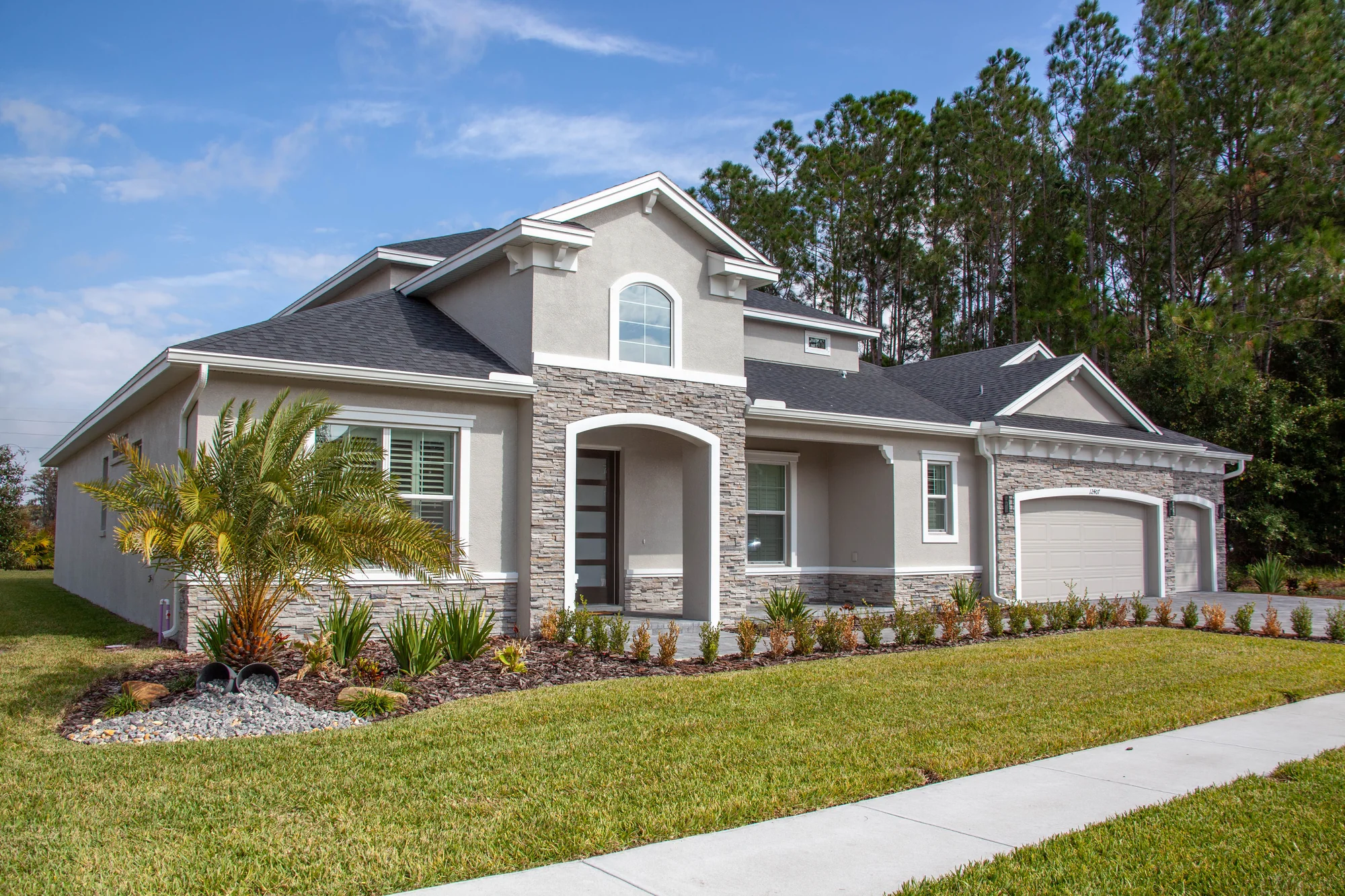
The rental doesn't care what your tax return says — and with a DSCR loan, neither does the lender. Qualify on the property's own rent, hold for cash flow and appreciation, and keep buying as you grow. Here's how the buy-and-hold play actually works in Southwest Florida.
A DSCR loan asks one question: does the property's rent cover its own payment? If it does, the deal can stand on its own — no W-2s, no tax returns, no personal debt-to-income ceiling holding you back. That's what makes it the engine of a buy-and-hold portfolio.
A DSCR of 1.0 means the rent exactly covers the financed payment (PITIA) on paper — not real cash flow, which still comes after vacancy, repairs, and management. Most programs look for around 1.0–1.25+, though some allow lower with the right file. Higher is stronger — and gives you room when a cost moves.
Because it qualifies on the property, your personal income never caps you. No tax-return gymnastics, no debt-to-income ceiling — so you can keep buying as your portfolio grows, often closing in an LLC.
DSCR programs typically want a meaningful down payment and cash reserves, and they price on the ratio, credit, and the property. As investor loans, they generally carry higher rates and larger down payments than owner-occupied conventional financing, and often a prepayment penalty in the early years. The stronger the rent-to-payment, the more options open up.
The whole play is finding a property whose rent carries its payment. Curious where a deal lands? Run it through the DSCR calculator.
A DSCR at 1.0 gets you the loan — but a rental you actually want to own clears more than the payment. Here's the full stack a real hold has to cover, so "it rents for more than the mortgage" doesn't fool you.
Insurance sits inside the payment. The "I" in PITIA is flood and wind coverage — and in Southwest Florida that's a heavy line that pushes your payment up and your DSCR down. It's the same force covered in the Cape Coral canal-front playbook, and it applies to any rental here.
"Rents above the mortgage" isn't cash flow. Vacancy, management, and maintenance are real even when you self-manage — budget them from day one so a break-even deal doesn't quietly cost you money.
Reserves are what let you keep buying. Lenders want them and so should you — they're the difference between riding out a vacancy and being forced to sell. Estimate a deal's ratio before you fall for the listing.
The stack above is an illustration of which costs to count, not a quote or a projection. Every property is its own number.
Southwest Florida has two very different rental stories in the same region, and the financing follows the rent. Knowing which one you're buying — before you offer — is what separates a portfolio builder from a stuck landlord.
More affordable, workforce-rental markets — think Lehigh Acres and parts of Cape Coral — tend to carry stronger rent-to-price ratios, so they pencil for cash flow. Higher-end and waterfront properties lean toward the appreciation play, where rent rarely covers a big payment. Neither is wrong; they're just different games, and DSCR reads them differently.
And on every one of them, the swing factor is insurance: because flood and wind premiums live inside your payment, they push your DSCR down directly. Two identical rents can produce very different ratios once the insurance is real.
How to pressure-test a hold before you offer:
This is general educational information, not financial or investment advice, and not a commitment to lend. Program guidelines, ratios, and reserve requirements vary and change; confirm current details for your specific scenario before acting.
Send me a property or a price range and I'll help you run the DSCR, factor the real insurance, and see whether it's a cash-flow deal or an appreciation play — before you write the offer.
A DSCR (debt-service-coverage-ratio) loan qualifies on whether the property's rent covers its payment, rather than on your personal income or tax returns. For a buy-and-hold investor it's the core tool, because it doesn't cap you on personal debt-to-income and often closes in an LLC.
A ratio of 1.0 means the rent exactly covers the financed payment (PITIA) on paper — before vacancy, repairs, and management, which real cash flow still has to cover. Most programs look for roughly 1.0–1.25 or higher, though some allow lower with the right file and pricing. Higher ratios generally open up better options — estimate yours here.
It can, because flood and wind insurance are part of the payment (the "I" in PITIA). A higher premium raises the payment and lowers the ratio, so it's worth getting a real insurance quote on the exact property before you count on the numbers — the canal-front playbook digs into the insurance side.
DSCR financing commonly allows closing in an LLC, which is one reason buy-and-hold investors favor it, though most lenders still require a personal guaranty. The specifics depend on the program and your full file — worth a quick conversation about how you want to hold title as you build the portfolio.
Send me a property or a price range and I'll help you run the DSCR, factor the real insurance, and read whether it cash-flows — before you make an offer. No full application yet, no hard credit pull, no obligation.
Ready to dive in? Start your full application →
Free guides
26 Southwest Florida financing guides — the worked numbers, the local gotchas and the checklists. Free, no application, yours to download.
Browse the Vault →